
Perry N. Halkitis, dean of the Rutgers School of Public Health, received the J. Michael McGinnis Leadership Excellence Award from the Interdisciplinary Association for Population Health Science.

Perry N. Halkitis, dean of the Rutgers School of Public Health, received the J. Michael McGinnis Leadership Excellence Award from the Interdisciplinary Association for Population Health Science.

Paul A. D’Avanzo, Ph.D., has joined the Rutgers School of Public Health’s Department of Health Behavior, Society and Policy as an assistant professor.

Living near green spaces before and during pregnancy as well as in early childhood is associated with a reduced risk of neurodevelopmental disorders, according to Rutgers Health researchers.
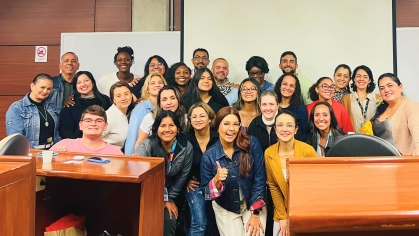
Rutgers School of Public Health students gain firsthand insights into Latino health inequities through international collaboration.

Mandy Goldberg, Ph.D, M.P.H., has joined the Rutgers School of Public Health’s Department of Biostatistics and Epidemiology as an assistant professor.

Tamara Taggart is joining the Rutgers School of Public Health as the inaugural Perry N. Halkitis Endowed Chair for Advancing LGBTQ+ Public Health.

Rutgers Health report highlights improvements in care following Nurture NJ policy initiatives.

Exposure to mycotoxins – a broad group of harmful substances produced by mold – during pregnancy may impact placental function, which could result in lower birthweight in humans, according to Rutgers Health researchers.
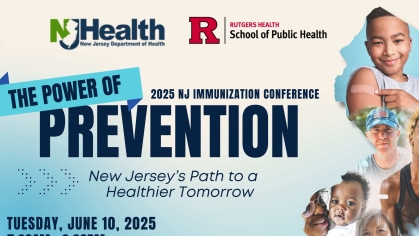
On June 10, 2025, the Rutgers School of Public Health Center for Public Health Workforce Development, in partnership with the New Jersey Department of Health (NJDOH), will host the 2025 New Jersey Immunization Conference.

As state budget cuts loom, a Rutgers-founded support service for people with intellectual and developmental disabilities faces an uncertain future
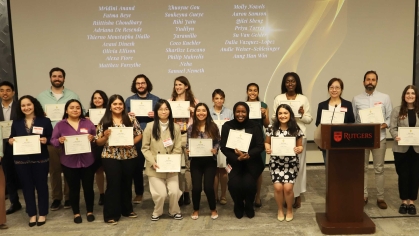
On Friday, May 9, 2025, the Rutgers School of Public Health held its inaugural Student Showcase and End-of-Year Awards Ceremony in Piscataway, NJ, bringing together students, faculty, staff, alumni, and guests to celebrate an outstanding academic year and recognize the incredible accomplishments across the community.

Deanna Kerrigan will join the Rutgers School of Public Health as vice dean on Nov. 1.