
Rutgers School of Public Health Office of Community Engagement, Population Health, and Global Public Health
Public health is fundamentally about people, relationships, and collective action. Whether working alongside communities in New Jersey or engaging with partners across the globe, meaningful progress requires listening, learning from one another, building trust, and creating opportunities for collaboration.
With this inaugural blog, the Rutgers School of Public Health’s Office of Community Engagement, Population Health, and Global Public Health is launching a monthly space to share our experiences, celebrate partnerships, reflect on lessons learned, and highlight the individuals and organizations working together to build healthier, more equitable communities.
This fall has been especially active, bringing opportunities to strengthen partnerships, connect local and global perspectives, foster student leadership, and create spaces for dialogue, learning, and community building.
Strengthening Public Health Partnerships Across New Jersey
On September 29, we welcomed New Jersey Department of Health Commissioner Raynard E. Washington and members of his leadership team to Rutgers School of Public Health.
The visit provided an important opportunity to discuss the challenges facing public health in New Jersey, explore opportunities to strengthen public health infrastructure, and reflect on the role of academic institutions in supporting the state's public health priorities.
Commissioner Washington met with faculty engaged in collaborations with the New Jersey Department of Health to exchange ideas, identify shared priorities, and explore opportunities to advance research, education, workforce development, and public health practice.
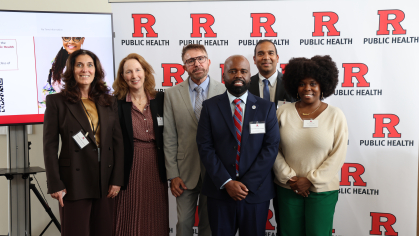
The visit also brought together faculty, staff, students, and representatives from community and healthcare organizations, including Robert Wood Johnson University Hospital, the North Jersey Community Research Initiative (NJCRI), and the Mexican Consulate's Ventanilla de Salud program.
These conversations reinforced a central principle of our work: addressing complex public health challenges requires sustained collaboration among government, academic institutions, healthcare organizations, and the communities they serve.
Building on this engagement, we look forward to welcoming Commissioner Washington back to Rutgers on December 7, 2026, for his State of Health Address. This event will provide another opportunity to engage a broad range of New Jersey stakeholders, including policymakers, local representatives, faculty, staff, students, community members, and the media, in conversations about the future of public health in our state.

Bringing Global Public Health Closer to Our Communities
Public health challenges transcend geographic borders, and the experiences of communities around the world offer valuable lessons for understanding and responding to challenges closer to home.
Through our Bringing Global Public Health to You initiative, we create opportunities for students, faculty, staff, community partners, and colleagues across Rutgers to engage directly with global public health leaders and practitioners.
These conversations offer insights into the realities facing communities in different countries, the innovative approaches being developed to address pressing health challenges, and the lessons that can inform public health practice across diverse settings.
In September, the series featured a conversation on universal health coverage in Saint Lucia, providing an opportunity to reflect on health systems, access to care, and the importance of developing solutions responsive to local contexts. In October, we are continued these conversations with a session exploring access to vaccines in Ghana.
Our goal is to bring global public health perspectives into our learning community, fostering curiosity, critical reflection, and meaningful exchanges with international partners while recognizing the connections between global experiences and local public health priorities.

Connecting Global and Local Public Health Efforts
Our commitment to bridging global and local public health was further reinforced through participation in a United Nations-organized meeting that brought together individuals and organizations across New Jersey engaged in global health initiatives.
The meeting, which included New Jersey's Commissioner of Health, provided an opportunity to learn about the contributions of organizations and professionals working internationally, including humanitarian and community-serving organizations such as the Red Cross and ShotAtLife.
A central theme emerged from these discussions: global and local health are deeply interconnected. Challenges related to health inequities, migration, access to healthcare, emergency preparedness, and social and economic conditions extend beyond national borders and require coordinated responses.
New Jersey's diverse communities and extensive networks of organizations working internationally position our state to contribute meaningfully to global public health while drawing on global experiences to strengthen our approaches to local challenges.
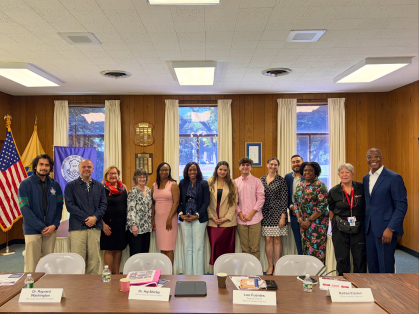
Building Bridges with the Mexican Consulate and Ventanilla de Salud
Another highlight of these months was our engagement with Ventanilla de Salud, a health outreach initiative operating through the Mexican Consulate that connects Latino communities with health information, preventive services, and healthcare and social service resources.
During a visit to the program, we learned about its efforts to connect community members with organizations and services throughout New Jersey, particularly individuals who may experience linguistic, cultural, economic, or structural barriers to accessing care.
We subsequently welcomed the Mexican Consul to Rutgers School of Public Health to continue conversations about potential areas of collaboration.

Among the opportunities being explored are ways for our Master of Public Health students to engage with Ventanilla de Salud's initiatives, learn directly from community-serving organizations, and contribute to efforts that promote access to care and health equity.
Partnerships like these remind us that public health education extends far beyond the classroom. Some of the most meaningful learning experiences emerge when students work alongside communities, recognize their knowledge and expertise, and contribute to initiatives grounded in community priorities.
Celebrating Community, Culture, and Inclusion at Rutgers

Building healthy communities also means creating environments where people feel welcomed, valued, supported, and connected.
During Hispanic Heritage Month, we came together for a Fiesta, celebrating culture, community, and the diversity that enriches our academic environment.
Spearheaded by the school's Diversity, Equity, Inclusion, and Justice Committee, in collaboration with the Office of Student Experiences, Public Health Practice, and Alumni Affairs and student leaders, the event brought together faculty, staff, and students to celebrate, strengthen relationships, and cultivate a greater sense of belonging.
This month, students and alumni also led a panel discussion reflecting on the experiences of Latine professionals in public health. Organized by Bryan Balarezo, this student-led initiative created opportunities for students and alumni to share their perspectives, reflect on their professional journeys, celebrate their identities, and foster meaningful connections across our school community.


These initiatives remind us that inclusion is not simply an institutional aspiration. It is something we build through everyday interactions, shared experiences, student leadership, and intentional efforts to ensure that diverse perspectives and identities are recognized, respected, and celebrated.
At a time when many communities face uncertainty and social challenges, creating welcoming spaces for dialogue, cultural expression, mutual support, and connection is especially important.
Looking Ahead: Learning, Connecting, and Acting Together
A common thread connects our activities: relationships, collaboration, and community engagement are essential to advancing public health and health equity.
Whether welcoming state leadership, learning from global partners, building relationships with the Mexican Consulate, supporting student leadership, or celebrating our school community, each experience creates opportunities to strengthen connections, exchange knowledge, and advance collective action.
Through this monthly blog, we hope to share more than a record of our activities and accomplishments. We want to create a space for reflection, dialogue, and learning that highlights the experiences, challenges, perspectives, and lessons emerging from our work.
Most importantly, we want to amplify the voices of our community partners, students, faculty, staff, and collaborators whose commitment and contributions make this work possible.
Public health is a collective endeavor. Meaningful change begins when we listen, learn, and act together, recognizing that communities—their experiences, knowledge, strengths, and priorities—must remain at the center of everything we do.
We look forward to continuing these conversations, strengthening our partnerships, and sharing more stories from our communities in the months ahead.


