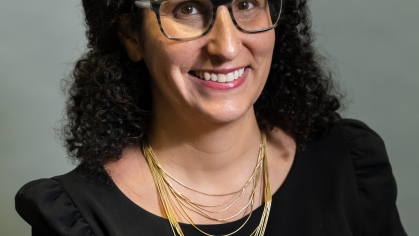
Mara Getz Sheftel, Ph.D. has joined the Rutgers School of Public Health’s Department of Health Behavior, Society, and Policy as an instructor. She is also a member of the Rutgers Institute for Health, Health Care Policy and Aging Research.

Mara Getz Sheftel, Ph.D. has joined the Rutgers School of Public Health’s Department of Health Behavior, Society, and Policy as an instructor. She is also a member of the Rutgers Institute for Health, Health Care Policy and Aging Research.

Melanie Shefchik, a Doctor of Public Health (DrPH) candidate at Rutgers School of Public Health, shares her journey and dedication to maternal and child health (MCH) and highlights the vital role breastfeeding plays in promoting health and well-being.

Rutgers researchers examined particulate matter from a June 2023 fire that triggered advisories for more than 100 million Americans in the Northeast.

As the United States government considers major policy decisions regarding social media, including a potential forced sale of TikTok and new legislation to protect young users, the comprehensiveness of research informing these decisions faces scrutiny. Jon-Patrick Allem, an associate professor at the Rutgers School of Public Health, discussed the NASEM report in a recent American Journal of Public Health editorial. He laid out his ideas for improvement with Rutgers Today.

The wellness industry is unregulated with few rules governing marketing claims often made by social media influencers, who present themselves as subject-matter experts providing “relatable” content to thousands, if not millions, of followers.

Rutgers Health researchers are recruiting participants for a study examining cigarillo perceptions and use in young adults. These products come in brands like Swisher Sweets, Black & Mild, White Owl, and Dutch Masters.

Disability Pride Month, held annually every July, is a time to honor the history, achievements, experiences, and struggles of the disability community. The month of July was chosen back in 1990 as a part of the celebration of the passage of the Americans with Disabilities Act (ADA), a federal civil rights law that prohibits discrimination against people with disabilities in everyday activities.
The Community Living Education Project (CLEP) was founded at Rutgers in 1991. A core belief of CLEP is that all individuals must have the opportunity to choose where and how they want to live. CLEP supports people with disabilities and their families as they explore the many possibilities of community living.

Compared with their heterosexual peers, thinking about suicide, attempting suicide, bullying in school and cyberbullying are happening at least double the rates among lesbian, gay and bisexual (LGB) adolescents – with these trends increasing among Black LGB adolescents, according to Rutgers Health research.

Systems designed to treat arsenic in private well water may be malfunctioning and endangering the health of people who count on them to keep their water safe, according to Rutgers researchers.

A fungal toxin that hinders animal fertility and fetal development may also disrupt human sex hormones in pregnancy, according to a Rutgers Health study.

The Environmental Protection Agency recently announced new federal rules requiring water companies to reduce the amount of so-called forever chemicals – which have been linked to increase cancer risk and other illnesses – in drinking water nationwide. Robert Laumbach, a clinical researcher with the Environmental and Occupational Health Sciences Institute who has been studying forever chemicals in the drinking water in Gloucester County, talked to Rutgers Today about what they are and how they impact human health.

Perry N. Halkitis, School of Public Health dean and Hunterdon Professor of Public Health & Health Equity at Rutgers, has been appointed to The National Academies of Sciences, Engineering, and Medicine (The National Academies) COVID-19 Vaccine Safety Research and Communications Committee.