
Krystal Mayers-Pagan, DHSc, MPH (SPH ‘20), CRT (SPH ‘19)
“To me, ‘humanizing public health’ means designing policies and systems that see people not as statistics, but as individuals shaped by culture, history, and lived experience."

Alumni April
Alumni April 2026: Humans of Rutgers School of Public Health
Alumni April, an annual initiative from Rutgers School of Public Health's Office of Career Services, honors our alumni advancing public health through meaningful impact.
Humans of Rutgers School of Public Health
This year's theme highlights alumni stories—non-traditional paths, interdisciplinary work, and people-centered values that define the field. Scroll through their profiles to discover how Rutgers alumni shape public health.
Carissa Greco Dougherty, MPH (SPH ‘20)
About Carissa
Carissa Greco Dougherty is a Senior Project Coordinator at the Bloustein Center for Survey Research at Rutgers University. In her role, she helps lead survey research projects from planning through data collection and analysis, managing research operations, supervising staff, and working with partners to ensure projects run smoothly and produce high-quality data. Prior to this position, Carissa worked in both clinical and social research, including studies involving individuals with Multiple Sclerosis and cancer survivors. She earned both her Bachelor of Public Health and Master of Public Health from Rutgers University. Outside of her day job, Carissa serves as Chairperson of the Board of Trustees for Coastal Volunteers in Medicine, a nonprofit clinic that provides healthcare to uninsured residents in Ocean County, New Jersey.
What does "humanizing public health mean" to you?
"To me, humanizing public health means remembering the people behind the data, policies, or health concerns. While we may study theory, case studies, and datasets in the classroom, there are real people being impacted every day. For public health to do its job effectively, all people and their experiences deserve to be seen, heard, and valued."
What’s one piece of advice you’d give to those pursuing a career in public health?
"Don’t doubt yourself—every experience you’ve had can bring value to public health in ways you might not expect. The field will continue to shift as it navigates changes in leadership, funding, and priorities, so flexibility is important. But the need for public health will never go away, and public health needs you. Stay involved, and if your schedule allows, look for ways to contribute in your community."

Dawn Walter, MPH (SPH ‘07)
About Dawn
"When I go to the doctor I don't want them to ask me what type of surgery I'd like to have. I, of course, want the doctor to advise me based on their training and expertise. The same is true for a data analyst. I collaborate on healthcare research with smart, driven physicians, most with impressive educational pedigrees. But I don't provide any value to the team if I ask them how they want to analyze the data or if I defer to their preferences for which statistical technique to use. I have to use my unique skill set, based on my own training and experience, to assure research outcomes of the highest quality."
How did your non-traditional path shape your public health career?
"My undergrad degree was a BS in Computer Science and this lead me to a first career as an IT consultant. Following IT, my second career was full time mom of 2 children. Eventually and inevitably, my kids started to grow up, and when I realized they had more to talk about at the dinner table every night than I did, I decided it was time to find a new career. I enrolled in the MPH program in Newark at what was then UMDNJ. Rather than finding a new career, my MPH program ended up helping me rediscover my interest in programming and all things data. After I got my MPH in Epidemiology and Quantitative Methods I got a job as a data analyst at NYU Langone, where I've been for 15 years. I've worked in the Department of Public Health with researchers who are pulmonologists, urologists, substance use psychologists, as well as primary care and emergency department physicians, and have shared authorship on dozens of papers. Big data sets, analyzed with statistical rigor by people who understand each dataset's particular strengths and weaknesses, is providing evidence-based results that inform and advance public health initiatives."
What does “humanizing public health” mean to you?
"Humanizing Public Health means understanding that you cannot fully understand the experiences of people who live a different type of life than you live. It means seeing and appreciating the humanity of every group of people you study. It means respecting all people, without exceptions."
What’s one piece of advice you’d give to those pursuing a career in public health?
"Always hold compassion for the people who are the subjects of your public health research. Some people are out in the field, interacting with people every day. But a lot of us are in offices, or home on our computers, so we have to work harder to remember the living and breathing people affected by our work."

Alumni Spotlights
Explore the spotlights below to learn more about our featured alumni and their public health journeys.
Krystal Mayers-Pagan, DHSc, MPH (SPH ‘20), CRT (SPH ‘19)
“To me, ‘humanizing public health’ means designing policies and systems that see people not as statistics, but as individuals shaped by culture, history, and lived experience."

Rich Hubner, MPH (SPH ‘95)
"Humanizing the field helps ensure [efficiency vs. equity, speed vs. inclusion] are made transparently and with respect for those most affected. The strongest public health systems do both well—using data to see clearly and empathy to act wisely.”

Neha, MPH (SPH ‘25)
“Humanizing public health, to me, means recognizing that behind every statistic is a real person with lived experiences, emotions, culture, and context. It’s about listening with empathy, reducing stigma, and designing programs that center dignity, equity, and compassion.”

Nandini Selvam, PhD, MPH (SPH ‘06, ’01)
“Humanizing public health means ensuring that the voices and lived realities of communities shape the policies and systems designed to serve them - not just the data that describes them.”

Denise Anderson, PhD, MPH (SPH ‘07)
“To me, humanizing public health means lifting it from an ‘invisible shield’ to something people can see, understand, and recognize in their everyday lives—how it protects them from routine risks and hazards.”
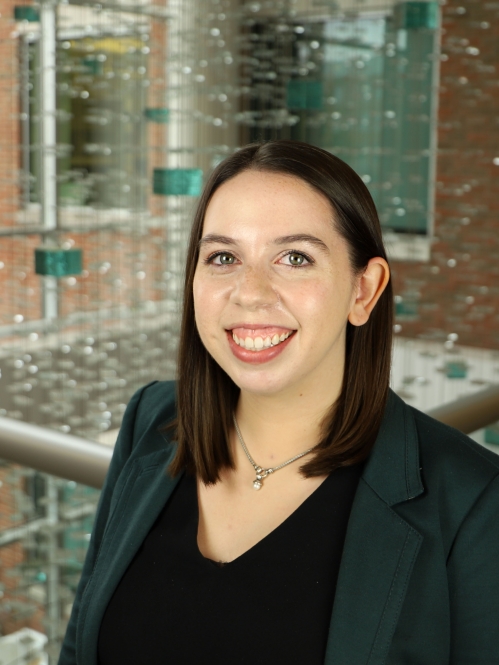
Claire Brown, MPH (SPH ‘19)
“Public health saves lives, but the arts and humanities make them worth living. Humanizing public health means always prioritizing purpose over profit and remembering why we do what we do on the most fundamental levels.”
Alumni Spotlights
Explore the spotlights below to learn more about our featured alumni and their public health journeys.


