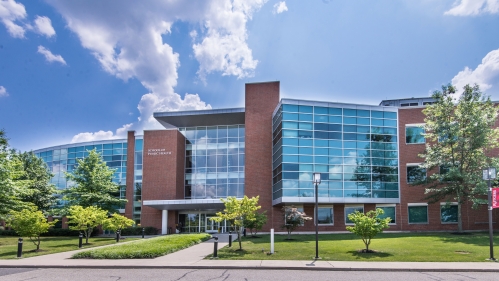
Front of SPH Piscataway Building

Alumni April

Alumni April 2026: Humans of Rutgers School of Public Health

Alumni April, an annual initiative from Rutgers School of Public Health's Office of Career Services, honors our alumni advancing public health through meaningful impact.

Humans of Rutgers School of Public Health
This year's theme highlights alumni stories—non-traditional paths, interdisciplinary work, and people-centered values that define the field. Scroll through their profiles to discover how Rutgers alumni shape public health.

Carissa Greco Dougherty, MPH (SPH ‘20)

About Carissa

Carissa Greco Dougherty is a Senior Project Coordinator at the Bloustein Center for Survey Research at Rutgers University. In her role, she helps lead survey research projects from planning through data collection and analysis, managing research operations, supervising staff, and working with partners to ensure projects run smoothly and produce high-quality data. Prior to this position, Carissa worked in both clinical and social research, including studies involving individuals with Multiple Sclerosis and cancer survivors. She earned both her Bachelor of Public Health and Master of Public Health from Rutgers University. Outside of her day job, Carissa serves as Chairperson of the Board of Trustees for Coastal Volunteers in Medicine, a nonprofit clinic that provides healthcare to uninsured residents in Ocean County, New Jersey. 

What does "humanizing public health mean" to you?

"To me, humanizing public health means remembering the people behind the data, policies, or health concerns. While we may study theory, case studies, and datasets in the classroom, there are real people being impacted every day. For public health to do its job effectively, all people and their experiences deserve to be seen, heard, and valued." 

What’s one piece of advice you’d give to those pursuing a career in public health?

"Don’t doubt yourself—every experience you’ve had can bring value to public health in ways you might not expect. The field will continue to shift as it navigates changes in leadership, funding, and priorities, so flexibility is important. But the need for public health will never go away, and public health needs you. Stay involved, and if your schedule allows, look for ways to contribute in your community." 

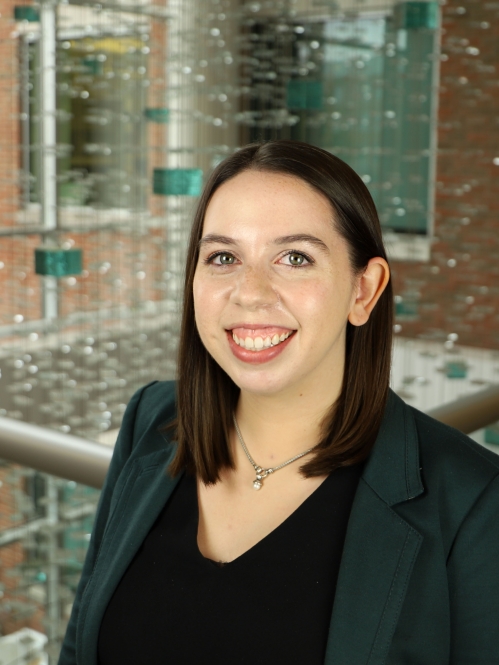
Carissa Greco Dougherty smiling at camera.

Dawn Walter, MPH (SPH ‘07)

About Dawn

"When I go to the doctor I don't want them to ask me what type of surgery I'd like to have. I, of course, want the doctor to advise me based on their training and expertise. The same is true for a data analyst. I collaborate on healthcare research with smart, driven physicians, most with impressive educational pedigrees. But I don't provide any value to the team if I ask them how they want to analyze the data or if I defer to their preferences for which statistical technique to use. I have to use my unique skill set, based on my own training and experience, to assure research outcomes of the highest quality."

How did your non-traditional path shape your public health career?

"My undergrad degree was a BS in Computer Science and this lead me to a first career as an IT consultant. Following IT, my second career was full time mom of 2 children. Eventually and inevitably, my kids started to grow up, and when I realized they had more to talk about at the dinner table every night than I did, I decided it was time to find a new career. I enrolled in the MPH program in Newark at what was then UMDNJ. Rather than finding a new career, my MPH program ended up helping me rediscover my interest in programming and all things data." 

"After I got my MPH in Epidemiology and Quantitative Methods I got a job as a data analyst at NYU Langone, where I've been for 15 years. I've worked in the Department of Public Health with researchers who are pulmonologists, urologists, substance use psychologists, as well as primary care and emergency department physicians, and have shared authorship on dozens of papers. Big data sets, analyzed with statistical rigor by people who understand each dataset's particular strengths and weaknesses, is providing evidence-based results that inform and advance public health initiatives." 

What does “humanizing public health” mean to you?

"Humanizing Public Health means understanding that you cannot fully understand the experiences of people who live a different type of life than you live. It means seeing and appreciating the humanity of every group of people you study. It means respecting all people, without exceptions." 

What’s one piece of advice you’d give to those pursuing a career in public health?

"Always hold compassion for the people who are the subjects of your public health research. Some people are out in the field, interacting with people every day. But a lot of us are in offices, or home on our computers, so we have to work harder to remember the living and breathing people affected by our work." 

Dawn Walter posing for a professional headshot.

James Lomonte, MPH (SPH '23), CPH, CEHRS

About James

"My name is James Lomonte, MPH, CPH (‘23), and I am the Data Quality Assurance Coordinator for the New York City DOHMH eCR Certification program. My work emphasizes communication with hospitals and healthcare facilities to successfully implement eCR reporting. I am excited for the opportunity to discuss how attending Rutgers School of Public Health prepared me to excel in my career in epidemiology and the importance of my role in increasing the efficiency and effectiveness of healthcare as a function of public health."

How did your non-traditional path shape your public health career?

"I majored in biology, and interned for a lot of environmental science/nonprofit organizations while minoring in Public Health in undergrad. For my current role, I work as a data quality assurance coordinator for the New York City eCR certification program. My focus is on onboarding hospitals and healthcare organizations for eCR Certification. eCR has gained a significant amount of interest, funding, and focus since the COVID-19 pandemic because of its benefits compared to manual disease reporting." 

What does “humanizing public health” mean to you?

“Humanizing public health” requires understanding the factors that contribute to health inequalities in order to create tailored strategies that meaningfully engage the population of interest. One must be acquainted with the socioeconomic, environmental, social, mental, and physical factors experienced by different groups of people in order to successfully provide an intervention to remediate disease and promote well-being." 

What’s one piece of advice you’d give to those pursuing a career in public health?

"I would advise any person joining the public health workforce to have a passion for their focus in public health, an ability to defend strategies and interventions that are grounded in scientific knowledge, preparation to engage in crystal clear, productive communication, and adaptability in response to changes that actively occur in the public health landscape." 

James Lamonte smiling at camera with blurred images of photo.

Kelly Lenahan, MPH (SPH '19)

About Kelly

Kelly Lenahan is the Director of Global HTA Initiatives at ISPOR, the leading professional society for health economics and outcomes research. Since 2015, she has overseen the organization’s global health technology assessment (HTA) activities, guiding strategic efforts to advance HTA capacity and collaboration worldwide. In her role, Kelly partners with regional experts to convene ISPOR HTA Roundtables across and within five major global regions, fostering dialogue, knowledge exchange, and policy-relevant insights. She is deeply committed to strengthening HTA and healthcare systems, particularly in low- and middle-income countries, by building connections, facilitating shared learning, and expanding access to high-quality evidence. 

Kelly holds a Master of Public Health with a concentration in Epidemiology from Rutgers University. Her research includes multiple publications on coverage restrictions for specialty medicines in the United States. She has been recognized as a Rising Star by the Healthcare Businesswomen’s Association for her leadership and contributions to the field.

How did your non-traditional path shape your public health career?

"For undergraduate, I started in a 6-year PharmD program. I ended up getting sick in my 5th year and had to change my major to health services administration. After working in a pharmacy and then pharmaceutical sales, I landed my current job (ISPOR) by accident, without seeing a job description. I got my MPH in Epidemiology while at ISPOR. I left my job at ISPOR to go work as a research associate at Tufts Medical Center looking at specialty drug coverage, then came back to my current job, where I now work on bringing together people globally to discuss common issues of how they cover drugs. Even though my MPH is in Epi, I don't really use it in the traditional sense, but I do use it to think differently/problem solve." 

What does “humanizing public health” mean to you?

"Humanizing public health means to me that we stop focusing on number and focus on the individual. We meet them where they are, we see them for who they are. People are individuals. We are all the same globally, no matter where we live. We all want the same basic needs such as love, friendship, wealth, health, success. We just all have different backgrounds and cultures, but have the same basic needs. So to humanize public health means to see people as equals to us and put ourselves in their shoes." 

What’s one piece of advice you’d give to those pursuing a career in public health?

"Careers are never linear. You are doing better than you think. Do not compare yourself to others because you do not know what they are going through. I've had colleagues come to me and ask for help because I make it look easy, but every day at work and being mid-career can be a struggle! Talk about what you are going through, others are going through or have gone through what you are. Help the next generation. They are here to make your job easier, not harder." 

A person speaking at a podium for the 12th HTAsiaLink Conference in 2025.

Lily Black, MPH (SPH '22)

About Lily

"I am a dedicated environmental professional that combines my public health knowledge with my passion with protecting the environment and making it more healthy and sustainable for everyone. With a Bachelors of Science from Rutgers and a 4+1 Masters of Public Health from the Rutgers School of Public Health, I went on to join the U.S. Environmental Protection Agency in the Air and Radiation Division based out of NYC. I have just completed my fourth year there and have helped to implement over $38 million in federal grants, transportation conformity efforts through the Clean Air Act, environmental education efforts, and over all air quality improvements. I am always looking to challenge myself and look for the next best innovation for human health and the environment."

What does “humanizing public health” mean to you?

"Humanizing public health means to me that public health, and all of the concentrations within it, are not as foreign as people may think. They touch upon every aspect of our lives and can shape them, for better or worse. Public health is very human by nature we just have to do our part in showing people how big of a role it plays in our lives." 

What’s one piece of advice you’d give to those pursuing a career in public health?

"Don’t be afraid to take a 'stepping stone job' if you think it’ll lead you in the right direction. The workforce is all about connections and you never know who you’ll meet or what you’ll be able to do in any career you’ll choose. " 

A person smiling at the camera with a woods area behind them.

Lisa Hamilton, MPH (SPH)

About Lisa

For several years,  Lisa has managed environmental health and compliance programs for NJ Natural Gas Company. She is responsible for: maintaining compliance with the EPA PCB Mega Rule and state and federal air quality regulations; hazardous waste management and environmental emergency response; developing and providing environmental health & safety training and maintaining the corporate environmental management system. She is the past Chairperson of the AGA Environmental Matters Committee and is involved in several other environmental advocacy organizations and is a Certified Hazardous Materials Manager and Certified Instructional Trainer.

She holds a BS in Environmental Science from Cook College, Rutgers University and a Master’s Degree in Public Health from Robert Wood Johnson Medical School, University of Medicine and Dentistry.

How did your non-traditional path shape your public health career?

"My first job was as a Chemist, then I earned my Sanitary Inspector's License while working for a county health department. Before my current position, I worked as an Environmental Scientist in environmental consulting." 

What does “humanizing public health” mean to you?

"Educating people to realize that it takes many people to supply public health services in order to have positive public health outcome. Without public health , overall personal health is impossible."  

What’s one piece of advice you’d give to those pursuing a career in public health?

"The career path you have in your mind, may not be the only path for you. Be open-minded to explore all career opportunities that present themselves since you never know where life will lead you; and it may be better than you imagined." 

A person smiling for a photo with trees in the background.

Mikasa Modi, MPH (SPH '24)

About Mikasa

Mikasa Modi is a public health strategist working at the intersection of health care, policy and strategic communications. As an Associate Director at APCO in Washington, D.C., Mikasa translates complex scientific and public health issues into actionable policy insights and communications strategies, with a focus on health security issues including access to critical medicines, pandemic preparedness and emerging security challenges. Mikasa has also led multi-stakeholder coalitions and policy engagement efforts on issues including health care coverage and affordability, opioid overdose prevention and access to nutrition programs such as SNAP and WIC. Mikasa is a two-time Rutgers graduate with a BA in Biological Sciences and an MPH in Health Systems and Policy.

What does “humanizing public health” mean to you?

"At its core, public health is about building systems that work for people. Humanizing public health means connecting policy to the systems that touch everyday life and shaping them so that communities are not just resilient, but healthy and thriving."  

What’s one piece of advice you’d give to those pursuing a career in public health?

"In this time when trust in public health feels fragile, it's important to remember that it still touches every part of our lives. If you stay curious and flexible, you’ll find ways to connect your interests and experiences to improving health outcomes, even in unexpected ways." 

Mikasa Modi smiling at camera for professional headshot photo.

Plyshette Wiggins, MPH (SPH '01)

About Plyshette

Plyshette Y. Wiggins has thirty years of public health experience working for national and local non-profit organizations, federal, state and local government agencies, including the Centers for Disease Control in Atlanta, GA. Initially trained in health education, Plyshette is skilled in quality improvement, research and community clinical linkage program planning, development, implementation and evaluation, with specialization in policy, system and health fairness initiatives. Plyshette is an Ambassador for the American Cancer Society Voices campaign. After years of experience with grant writing, implementation and management, Plyshette thrives in her passion for assisting non-profit organizations with grant writing. 

In addition to professional grant writing and co-authoring articles in peer reviewed journals, Plyshette is a self-published creative writer and certified Journal Writing Coach. Whether, she is sharing health information or reciting poetry, Plyshette loves to encourage others through speaking engagements and her writing. Topics include and are not limited to cancer health awareness, education, early detection, research, community coalition and relationship building, grief, social connection, poetry and journal writing. Plyshette Y. Wiggins is a well respected public health professional who lives in south Jersey with her two children.

What does “humanizing public health” mean to you?

"Getting back to the basics- understanding that data is people without the tears Yet using data to direct, plan, develop, implement and evaluate public health programs for all of humanity to benefit, while giving attention resources and funding to areas and groups that most need help. Respect, value, understand and communicate cultural, geographical, financial, social and other differences in ways that unify and improve public health and wellbeing for the whole person, community and public at large."  

What’s one piece of advice you’d give to those pursuing a career in public health?

"Public health is a service oriented field. Be a servant leader who stays focused on the main thing. The main thing will always be the main thing. Stay focused, diligent and work with purpose to improve the public’s health." 

A person holds a pink frame with text that reads "MY VOICE OUR FUTURE" at a "IGNITE WOMEN'S EMPOWERMENT SUMMIT" event, standing next to a mannequin in a bright pink suit.

Sarah Scharf, DrPH, MPH (SPH '11)

About Sarah

Dr. Sarah Scharf is a dynamic, impact-driven public health leader with 20 years at Rutgers University, dedicated to advancing health equity and improving population health. She serves as Executive Director of the Rutgers Cancer Health Equity Center of Excellence and Deputy Director of ScreenNJ, leading high-impact initiatives to reduce disparities, increase cancer screenings, and translate research into meaningful community outcomes. With a BA in Psychology, an MPH in Health Systems and Policy, and a DrPH in Advanced Practice Leadership, Sarah brings an interdisciplinary lens, spanning mental health, community engagement, and innovative healthcare delivery, to public health leadership. A certified health and wellness coach, she is passionate about mentoring future leaders, fostering innovation, and creating programs that strengthen communities and empower individuals.

How did your non-traditional path shape your public health career?

"My undergraduate background is in Psychology, with a minor in Sociology and a certificate in Criminology. Coming from this interdisciplinary foundation, I took a non-traditional path into public health, bringing perspectives from mental health, social systems, and criminal justice into my work. I’ve found that approaching public health through this diverse lens allows me to address health disparities and community needs in ways that complement traditional public health training. Non-linear journeys can uniquely shape the impact we have in public health." 

What does “humanizing public health” mean to you?

"To me, humanizing public health means putting people, not just data, at the center of our work. It’s about listening to communities, valuing lived experiences, and designing programs that respond to real-world needs with empathy and respect. By blending evidence with human insight, we can create public health initiatives that truly improve lives and advance equity." 

What’s one piece of advice you’d give to those pursuing a career in public health?

"Embrace interdisciplinary learning and stay curious. The public health workforce increasingly values diverse skills, from data translation and strategic thinking to community engagement and communication, and bringing a broad toolkit allows you to adapt, collaborate across sectors, and address complex health challenges with both empathy and evidence. By leaning into continuous learning and authentic partnership with communities, you’ll be well positioned to make meaningful impact wherever your career leads." 

A person posing for a professional photo in an office setting.

Treemanisha Stewart, MPH (SPH '10), CHES, REHS, DPA

About Treemanisha

Dr. Treemanisha M. Stewart is a strategic and visionary public health leader currently serving as the President-Elect of the DC Metro Public Health Association and the Deputy Director of Strategic Planning, Programs, and Policy at DC Health. Her extensive leadership portfolio includes previous roles as the Public Health Director and Health Officer for Sauk County, Wisconsin, and a program manager at the New Jersey Department of Health, complemented by her unique community service background as a former firefighter and 2011 "Firefighter of the Year".

A highly credentialed professional, she holds a Doctorate in Public Administration from Capella University and an MPH from Rutgers University, and she was recently recognized as one of the de Beaumont Foundation’s "40 Under 40 in Public Health" for her innovation and commitment to community health. Dr. Stewart is dedicated to transforming ineffective systems to improve the health of the community.

What does “humanizing public health” mean to you?

"Humanizing Public Health means to put people first. We must recognize that current systems and infrastructure are created to leave people out. We must not only safeguard those that are currently left out but recreate the system, so that no one else is left out moving forward." 

What’s one piece of advice you’d give to those pursuing a career in public health?

"It’s tough right now — honestly, even tougher than when I graduated. But say yes. Volunteer. Put yourself out there. Take every experience you can. Don’t close doors on yourself before you even know where they might lead. Some of the most unlikely opportunities ended up being the biggest door openers for me." 

A person smiling at the camera for a professional headshot photo.

Yi-Ru (Leo) Chen, PharmD, MS (SPH '2025)

About Yi-Ru (Leo)

Leo is a first-year PhD student in Pharmaceutical Health Services Research at the University of Maryland School of Pharmacy. He holds a PharmD from National Cheng Kung University and an MS in Health Outcomes, Policy & Economics, as well as an additional certificate in Applied Biostatistics from Rutgers University. His research focuses on the economic evaluation, safety, and effectiveness of pharmaceutical interventions. During his free time, Leo enjoys playing tennis, basketball, and badminton.

How did your non-traditional path shape your public health career?

"Before enrolling at Rutgers School of Public Health, I completed my pharmacy training in Taiwan. After graduating from Rutgers SPH, I worked as an intern at a pharmaceutical company." 

What does “humanizing public health” mean to you?

"To me, humanizing public health means remembering that behind every dataset, statistic, and policy are real people, families, and communities. It is about staying grounded in the human impact of our work and not losing sight of why we entered this field: to improve lives."  

What’s one piece of advice you’d give to those pursuing a career in public health?

"Public health offers many possible career paths, and it is okay if you do not know your passion right away. Stay open-minded, explore different opportunities, and trust that each experience can help guide you toward work that feels meaningful and motivating." 

A person smiling at the camera for a professional headshot photo.
Carissa Greco Dougherty smiling at camera.
Dawn Walter posing for a professional headshot.
James Lamonte smiling at camera with blurred images of photo.
A person speaking at a podium for the 12th HTAsiaLink Conference in 2025.
A person smiling at the camera with a woods area behind them.
A person smiling for a photo with trees in the background.
Mikasa Modi smiling at camera for professional headshot photo.
A person holds a pink frame with text that reads "MY VOICE OUR FUTURE" at a "IGNITE WOMEN'S EMPOWERMENT SUMMIT" event, standing next to a mannequin in a bright pink suit.
A person posing for a professional photo in an office setting.
A person smiling at the camera for a professional headshot photo.

Alumni Spotlights

Explore the spotlights below to learn more about our featured alumni and their public health journeys.

Krystal Mayers-Pagan smiling at camera.

Krystal Mayers-Pagan, DHSc, MPH (SPH ‘20), CRT (SPH ‘19)

“To me, ‘humanizing public health’ means designing policies and systems that see people not as statistics, but as individuals shaped by culture, history, and lived experience."

Learn more about Krystal's public health journey.

Rich Hubner Smiling at Camera.

Rich Hubner, MPH (SPH ‘95)

"Humanizing the field helps ensure [efficiency vs. equity, speed vs. inclusion] are made transparently and with respect for those most affected. The strongest public health systems do both well—using data to see clearly and empathy to act wisely.”

Learn more about Rich's public health journey.

Neha smiling at camera.

Neha, MPH (SPH ‘25)

“Humanizing public health, to me, means recognizing that behind every statistic is a real person with lived experiences, emotions, culture, and context. It’s about listening with empathy, reducing stigma, and designing programs that center dignity, equity, and compassion.”

Learn more about Neha's public health journey.

Nandini Selvam smiling at camera.

Nandini Selvam, PhD, MPH (SPH ‘06, ‘01)

“For me, humanizing public health is closing that distance: asking what is missing from the data, what the numbers can’t capture about lived experience, and whether the solutions we design will actually work in real life.

Learn more about Nandini's public health journey.

Denise Anderson smiling at camera.

Denise Anderson, PhD, MPH (SPH ‘07)

“To me, humanizing public health means lifting it from an ‘invisible shield’ to something people can see, understand, and recognize in their everyday lives—how it protects them from routine risks and hazards.”

Learn more about Denise's public health journey.

Claire Brown headshot.

Claire Brown, MPH (SPH ‘19)

“Public health saves lives, but the arts and humanities make them worth living. Humanizing public health means always prioritizing purpose over profit and remembering why we do what we do on the most fundamental levels.”

Learn more about Claire's public health journey.